My research develops AI methods that integrate generative modeling, reinforcement learning, and representation learning to produce reliable and generalizable behavior from imperfect data. I primarily work on long-horizon decision-making, latent skill learning, and planning under partial observability. More broadly, I am interested in how these ideas connect with LLMs and vision-language agents, robotics and autonomy, cyber-physical systems, and health-oriented AI, with applications in embodied intelligence, resilient infrastructure, and real-world autonomous systems.
The center remains fixed on Generative AI + Reinforcement Learning, while the surrounding domains show where these core methods are applied and extended. The goal is not to present unrelated topics, but to show a connected research program spanning robotics, cyber-physical systems, LLM and VLM agents, health AI, autonomous systems, and resilient infrastructure through shared ideas in planning, representation learning, robustness, and decision-making.
Zero-shot sports event recognition framework combining grounded visual refinement with motion-aware features for fine-grained video understanding.
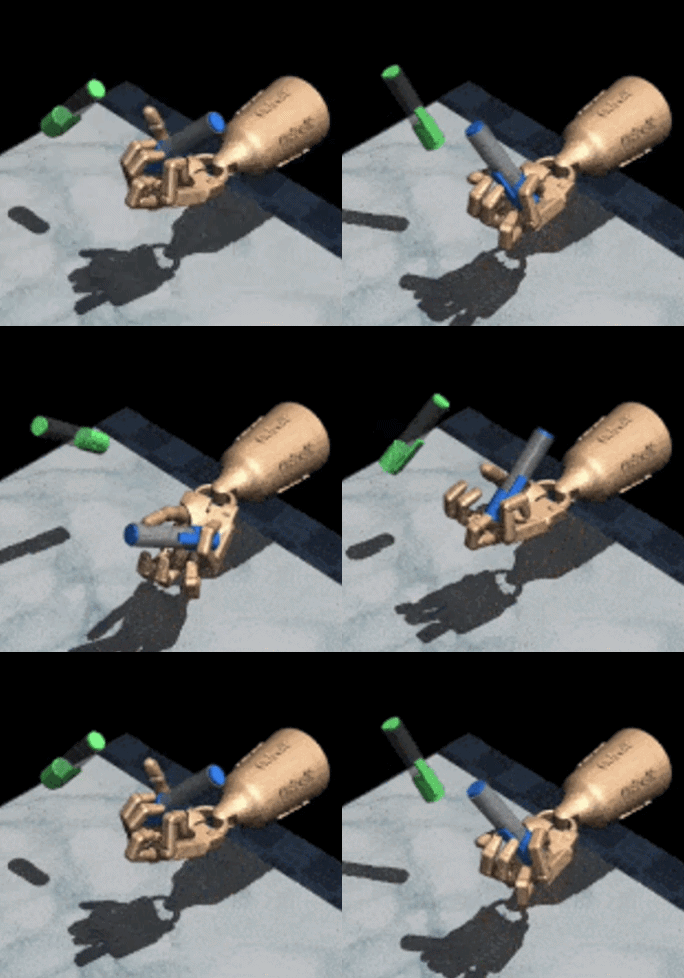
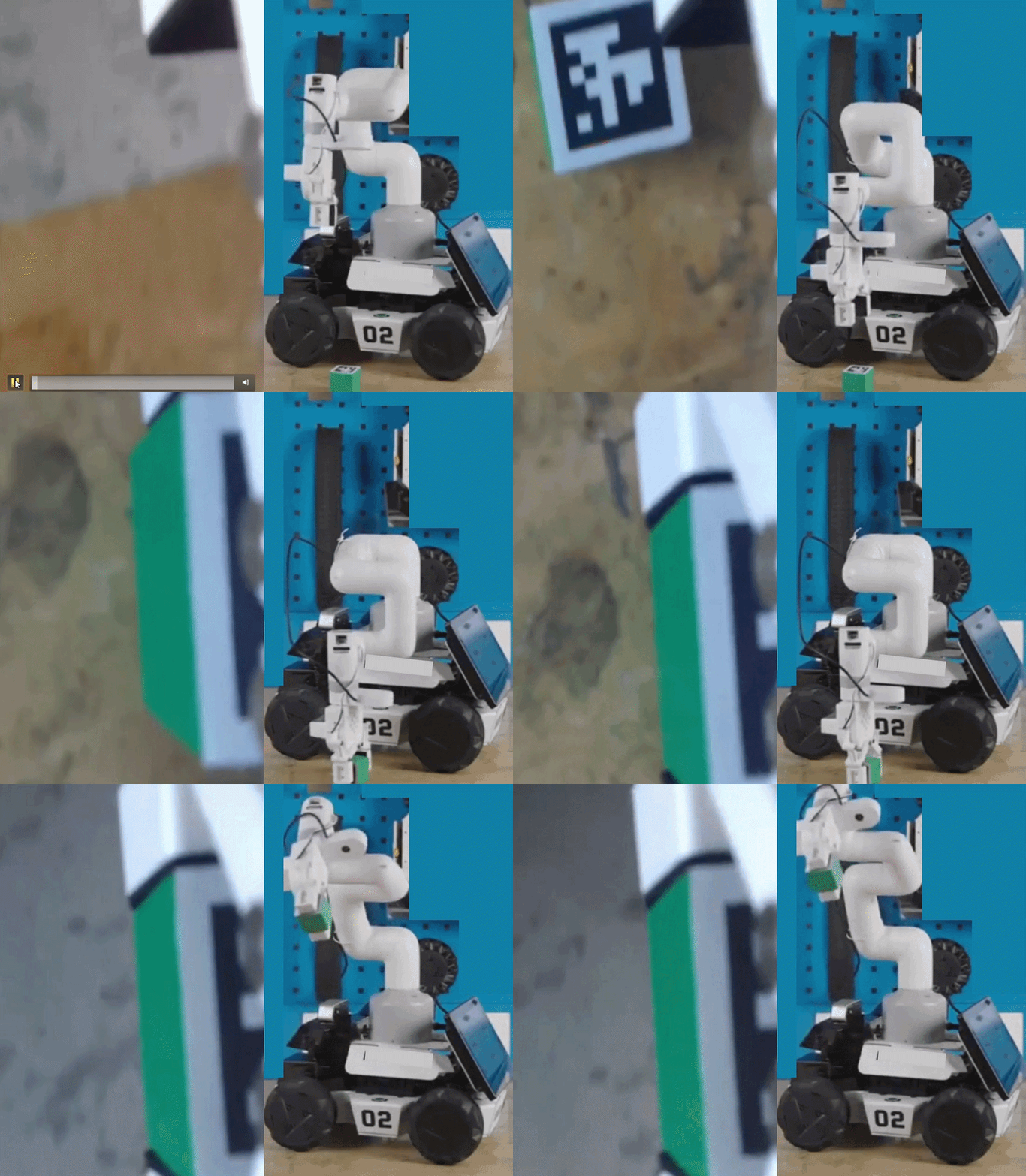
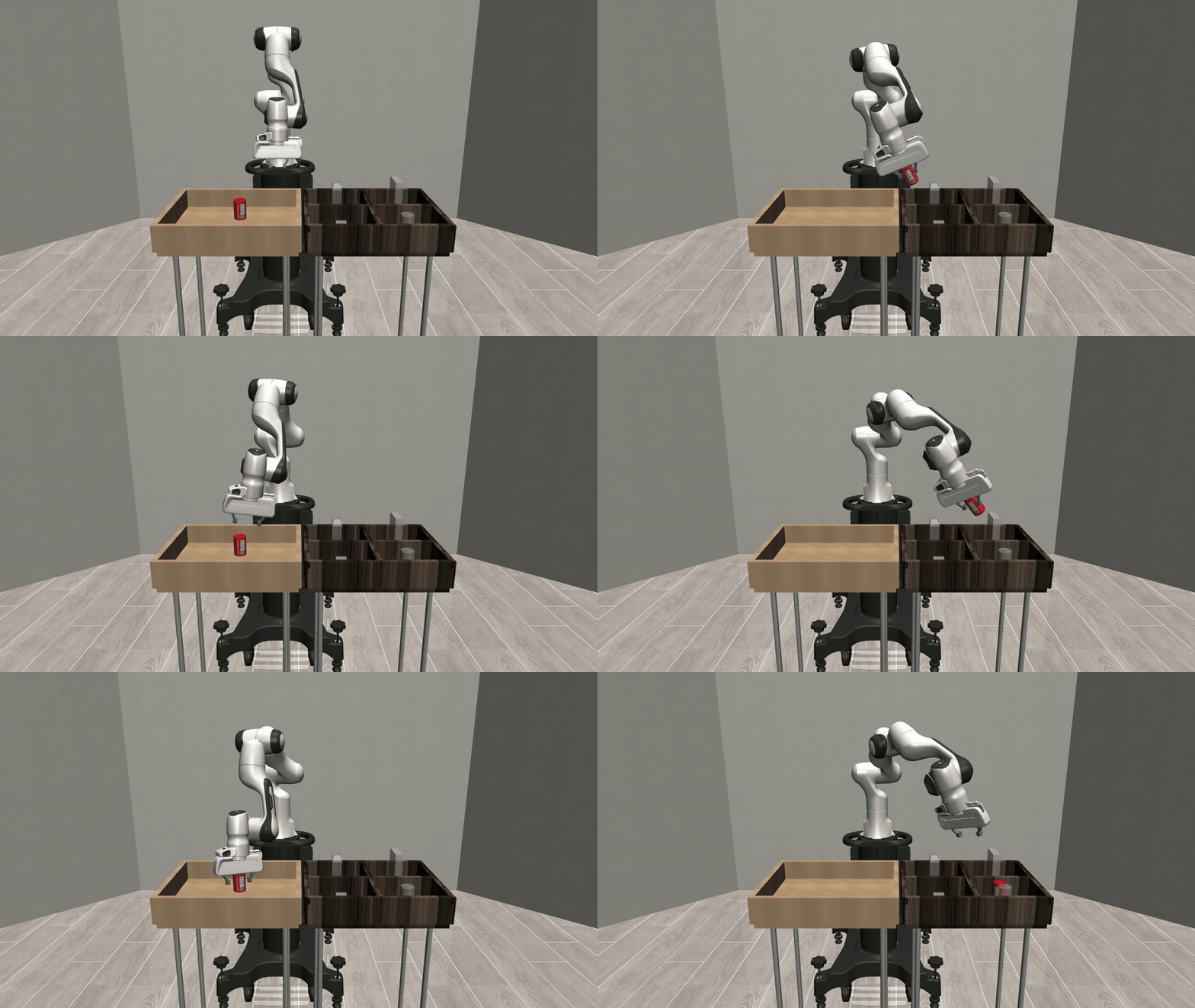
Latent-skill offline RL framework for contact-rich robotic manipulation. Improves long-horizon planning while preserving behavior support and low-level execution quality across D4RL, Adroit, and RoboSuite benchmarks.
Masked latent-skill inference for robust long-horizon planning under missing or degraded context. Focuses on partial observability in offline reinforcement learning and context-robust skill sequencing.

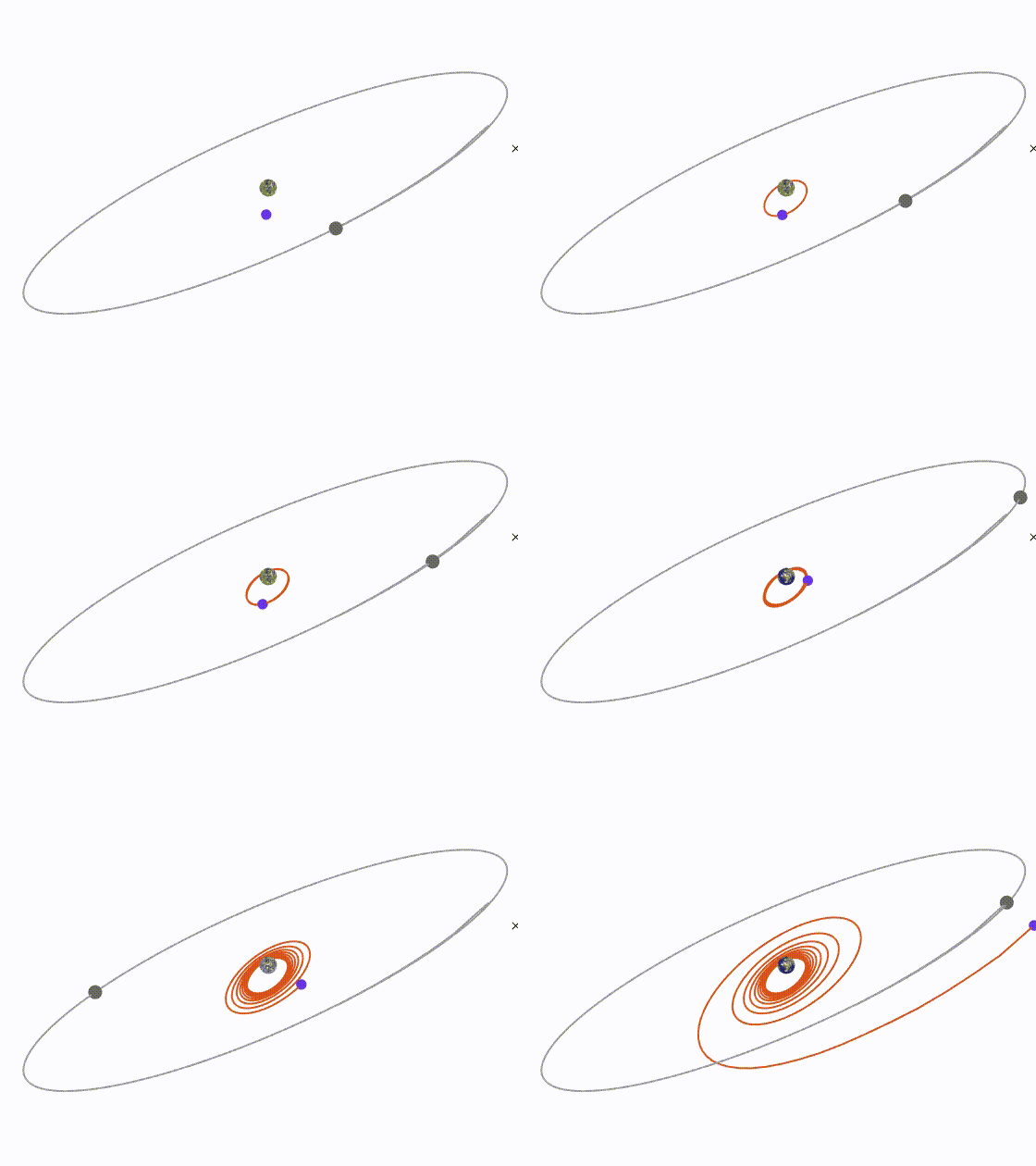
Developed the SA3C algorithm with an attention mechanism to improve sample efficiency and decision quality for low-thrust spacecraft trajectory optimization in geocentric and cislunar missions.

Introduced a resilient neural coordination framework for grid-forming inverter networks that maintains stability and coordination under cyberattacks in smart-grid environments.

Designed and evaluated resilient coordination methods for grid-forming inverters under communication disruptions and cyber-physical attacks, targeting secure and stable smart-grid operation.
Integrated a sequential optimization algorithm with a neural high-level planner and benchmarked the resulting framework against deep RL approaches for orbit-raising and halo-orbit transfer missions.
Adaptive multi-teacher knowledge distillation framework aimed at improving adversarial robustness beyond standard single-teacher or conventional training approaches.
Developed and compared machine learning models for laboratory earthquake prediction using LANL data, where CNN-LSTM models improved time-to-failure prediction over hand-crafted approaches.
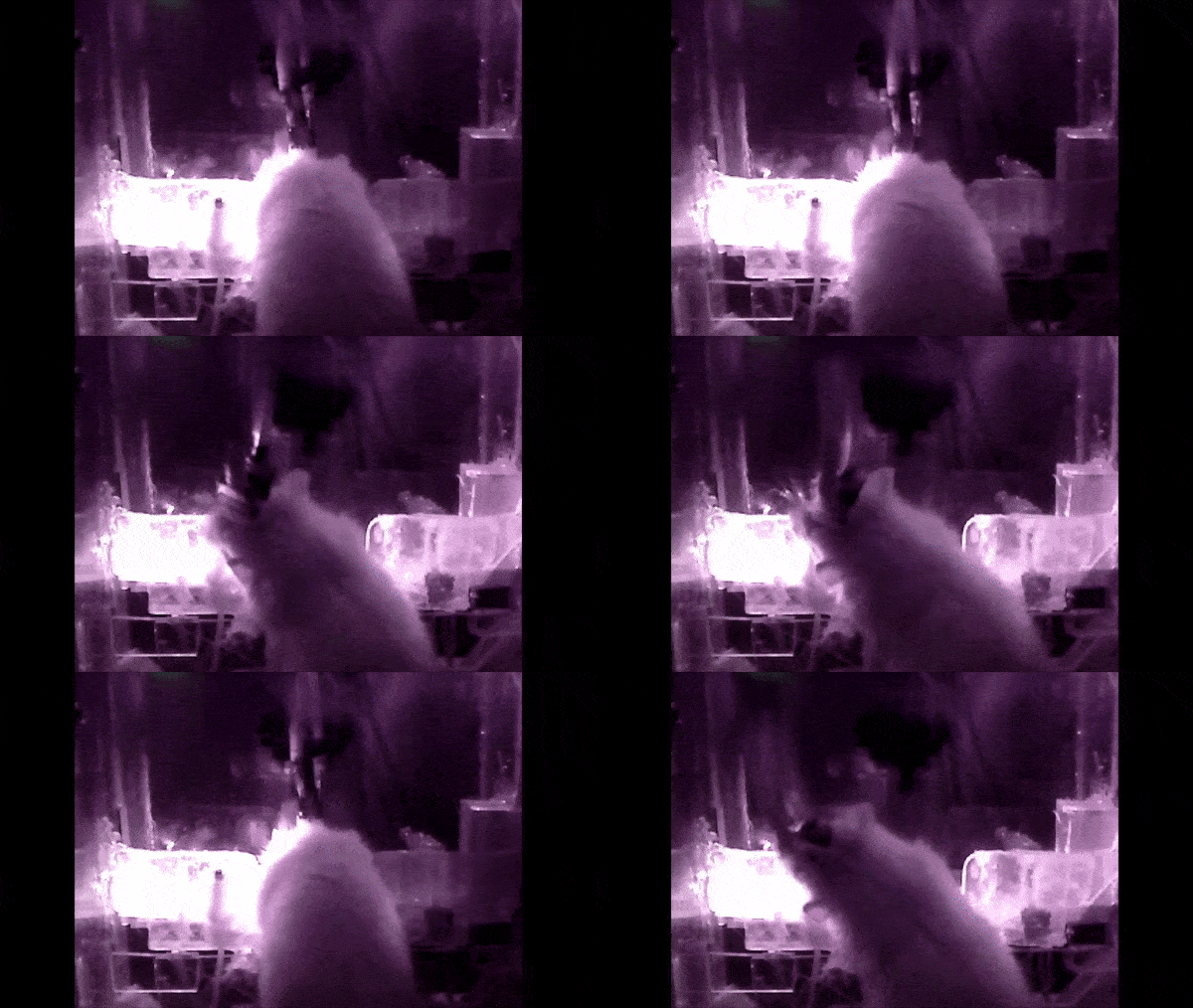
Demonstrated trajectory-based neuroprosthetic control in rodents using primary motor cortex activity, providing a cost-effective platform for studying brain-machine interfaces and neural control.